
How To Keep Your Heavy-Duty Truck's Air Brakes In Top Condition Year-Round
Moisture, heat, and stop-and-go routes can turn safe stops into scary ones. Keep heavy-duty truck air brakes crisp year-round with proven routines for drying, measuring, adjusting, and documenting. Let’s make sure your rig stops straight, avoids citations, and stays profitable.
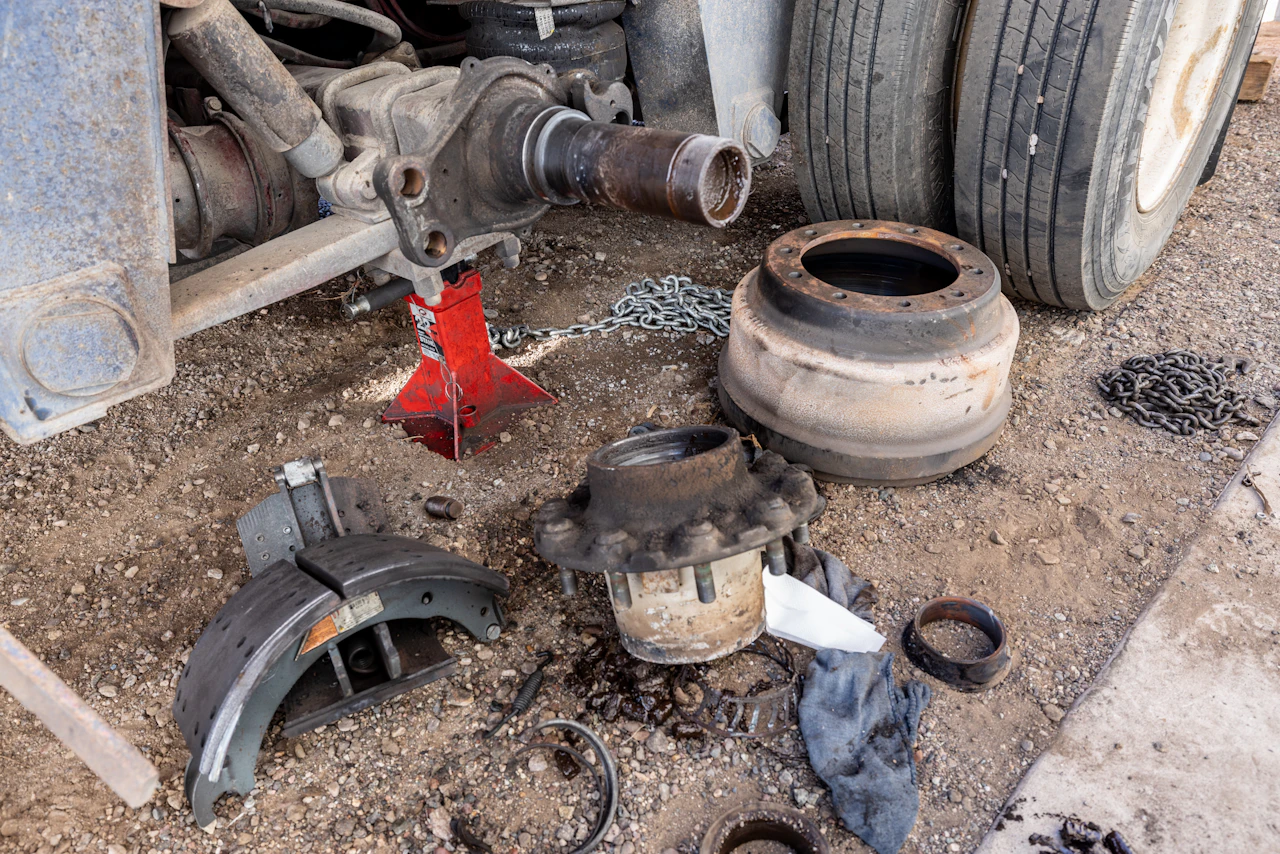
When the pedal feels mushy or the trailer tugs, it’s already late in the game. The smartest fleets treat heavy-duty truck air brakes like a safety system, not a set of parts, and they measure their condition instead of guessing. With a few repeatable checks, you can catch wear before it torches tires or invites a citation.
Done right, maintenance becomes predictable, and stops become shorter and straighter—rain or shine. Here’s the year-round playbook we lean on to keep heavy-duty truck air brakes sharp.
Know The Players: How The System Actually Makes You Stop
Understanding the pieces turns vague complaints into quick fixes. Your heavy-duty truck air brakes begin at the compressor and governor, storing pressure in primary and secondary reservoirs and routing it through treadle valves, relay valves, and ABS modulators to the brake chambers. S-cam or disc assemblies convert air force into shoe or pad squeeze at the drum or rotor, while slack adjusters and pushrod geometry set mechanical advantage.
Every junction is a chance for leaks, drag, or delay, so a clean diagram in your head makes it easier to isolate issues fast. Learn the flow once, and you’ll diagnose heavy-duty truck air brakes in minutes instead of hours.
Moisture Control Is Everything: Air Dryer, Purges, And Drains
Water is the enemy because it corrodes valves and freezes at the worst times. Service the air dryer cartridge and purge valve on a set interval, and make draining the tanks part of the shutdown habit. Clean, dry blow-off is the foundation of healthy heavy-duty truck air brakes. Check low points for pooled condensate and reroute any sagging lines where water collects.
During winter snaps, confirm the heater circuits at the dryer and protect exposed lines from road spray to keep purge reliability high. Dry air delivers crisp brake timing and prevents the “mystery” ABS events common in heavy-duty truck air brake systems.
Measurements That Matter: Stroke, Linings, And Leaks You Can Prove
Guessing gets expensive, and measuring gets results. Record the brake chamber pushrod stroke both released and fully applied, then compare it to the chamber size chart. A stroke that falls outside the limits steals braking force and lengthens stopping distance, which weakens heavy-duty truck air brakes even when the linings look fine. Measure lining or pad thickness at multiple points. Any taper or glazing points to seized hardware or misadjustment that can overheat a drum.
With the engine off and the system aired up, chock the wheels and perform a timed leak-down test. Pressure loss beyond spec shows you where to soap-check fittings, valves, and hoses. Solid numbers give you a defensible go or no-go line and keep heavy-duty truck air brakes honest between PMs.
Quick In-Cab And Yard Checks
- Listen for rapid compressor cycling. Short cycles point to air leaks that weaken heavy-duty truck air brakes.
- Verify the low-air warning and the spring-brake application point. Proper timing prevents roll-aways in the yard.
- Perform a tug test after coupling. A balanced hold confirms the trailer’s heavy-duty truck air brakes are responding correctly.
- Watch for the ABS lamp prove-out at key-on. A lamp that stays on means the system cannot modulate when traction gets sketchy.
Hardware That Makes Or Breaks Consistency: Adjusters, Cams, And Return Springs
Automatic slack adjusters are not set and forget. If you find excessive stroke on a properly installed unit, treat it as a symptom. Check for worn S-cam bushings, seized rollers, or weak return springs that make the adjuster chase a moving target. Renew hardware in axle sets so both sides of your heavy-duty truck air brakes react together under load. One lazy side will pull a rig off line during a panic stop.
On air disc systems, keep slide pins clean and boots intact or you will create tapered pad wear and uneven timing. Fresh hardware, square geometry, and correct torque are the quiet foundation of reliable heavy-duty truck air brakes.
Common Mistakes That Trigger Comebacks
- Re-lining without measuring stroke or replacing weak return hardware, which leaves heavy-duty truck air brakes imbalanced.
- Greasing slack adjusters to “fix” excess stroke instead of correcting seized cams or worn bushings.
- Ignoring ABS faults because the truck “stops fine,” losing modulation exactly when the surface is slick.
- Skipping dryer service “to save time,” then spending a weekend thawing valves and lines.
Documentation And Intervals: Make Good Work Repeatable
What you do not record, you repeat. Build a simple form that captures chamber size, released and applied stroke, lining thickness, leak-down times, and ABS status for your heavy-duty truck air brakes. Torque-stripe everything you touch, take photos of stroke measurements, and attach them to the repair order so any movement is obvious at the next visit.
This paper trail proves compliance, speeds audits, and helps your techs spot trends by VIN, such as the unit that always creeps long on stroke by the next PM. Consistent record-keeping is how solid heavy-duty truck air brake practice becomes culture.
Driver Coaching That Saves Components
Technique matters as much as torque specs. Teach smooth brake applications, downshifting before long descents, and extra following distance in wet weather. These small driving habits protect heavy-duty truck air brakes from heat and imbalance.
Encourage drivers to report longer stopping distances, a spongy pedal feel, or a trailer that seems to push the tractor. Those comments often appear before a measurable change in stroke or a failing relay valve. Make daily in-cab checks non-negotiable. Warnings caught early keep heavy-duty truck air brakes from turning into a roadside breakdown scene.
Your Year-Round Checklist
- Service the air dryer cartridge and purge valve, and drain the tanks until the discharge is clean and dry to support healthy heavy-duty truck air brakes.
- Measure and record the pushrod stroke and compare it to the chamber size chart. Correct any outliers before the truck leaves.
- Inspect linings or pads, cams, rollers, and return springs, and replace worn parts in axle sets.
- Perform a timed leak-down test and soap-check the system. Repair any fittings, hoses, or valves that waste compressor cycles.
- Confirm ABS lamp prove-out and inspect sensor harness routing. Secure and protect all wiring.
- Road-test for straight, hands-off stops, then use an infrared gun on drums or rotors to identify hot outliers that indicate drag.
Don’t Neglect Your Air Brakes Any Season
Ready to turn “it should be fine” into “we measured it, and it is”? Bring your rig to Rollin Wrench. We blueprint your heavy-duty truck's air brakes, measure the stroke, renew hardware, perform leak checks, and verify ABS. Book your year-round brake service today and stop with confidence. For more information, read our article on our top three brake maintenance tips.
